Request Job Estimate
 Tap to Call

Introduction
Basements occupy a unique and inherently challenging position within any building. Situated entirely or partially below ground level, they are surrounded on multiple sides by soil, groundwater, and the cumulative effects of surface water runoff — conditions that above-ground floors simply never encounter. Understanding why basements are vulnerable to water leaks requires looking beyond surface-level symptoms and examining the structural, environmental, and drainage-related forces that act on below-ground spaces day and night. For London homeowners — many of whom live in Victorian terraces, Edwardian conversions, or properties with lower-ground-floor flats — this vulnerability is compounded by ageing foundations, urban drainage challenges, and London's clay-heavy subsoil. This article explains the mechanisms behind basement water intrusion, the risks of ignoring early warning signs, and the preventative steps that can protect your property.
Why Basements Sit in a Naturally Vulnerable Position
Above-ground walls shed rainwater by design. Water falls, hits a surface, and runs away under gravity. Basements, by contrast, are enclosed within the earth. Every side — the floor slab, the foundation walls, and in some cases the ceiling structure — faces ongoing exposure to moisture. Groundwater exists at varying depths beneath virtually every urban property, and in a city like London, where the water table fluctuates seasonally, basements can find themselves in direct contact with saturated ground for extended periods.
This is compounded by the fact that basements are often the lowest point of a building's drainage system. When surface water accumulates around a property and the drainage infrastructure struggles to cope — a common occurrence during heavy rainfall in densely built urban environments — that water has nowhere to go except downward and inward. Homeowners who dismiss a slightly damp corner as a minor inconvenience often discover months later that they have a persistent structural moisture problem requiring significant remediation.
Understanding flooding and plumbing risks in the context of below-ground spaces is therefore not just about reacting to emergencies — it is about understanding why certain properties are structurally predisposed to water intrusion before a crisis ever occurs.
How Hydrostatic Pressure Causes Basement Leaks
What is hydrostatic pressure, and why does it matter for basements?
Hydrostatic pressure is the force exerted by water in the surrounding soil pushing against a basement's walls and floor slab. As rainwater saturates the ground adjacent to and beneath a property, it accumulates and exerts increasing outward-to-inward pressure on the basement structure. Even materials as robust as concrete are not indefinitely resistant to this sustained force.
This is one of the most underappreciated causes of basement water intrusion. Many homeowners assume that a concrete basement wall is waterproof by nature. In reality, concrete is porous. Over time — and particularly under sustained hydrostatic pressure — water molecules are forced through hairline pores, construction joints, and any minor imperfection in the material. The result is seepage that appears gradually as damp patches, efflorescence (white mineral deposits), or, in more advanced cases, steady water weeping through the wall surface.
In periods of prolonged rainfall — which London experiences with increasing frequency — the hydrostatic pressure around below-ground structures can reach levels that overwhelm even relatively well-constructed foundations. Older Victorian and Edwardian properties, whose basements were built with lime mortar, brick, and rubble rather than reinforced concrete, face an even more pronounced risk.
Foundation Cracks and Wall Seepage: The Structural Reality
Can foundation cracks cause basement leaks?
Yes — and they frequently do, often in ways that are not immediately visible. Foundations are not static structures. They experience ongoing thermal movement as temperatures change seasonally, minor settlement as the subsoil shifts, and stress from the superimposed loads above. In clay-dominant soils — which cover significant portions of London — the problem is amplified considerably. London Clay is notorious for its expansive behaviour: it swells when wet and shrinks when dry, exerting cyclical lateral pressure on foundation walls that progressively widens minor cracks over years.
Wall cracks in basements fall into two broad categories. Vertical cracks are often associated with differential settlement or concrete shrinkage during curing. Horizontal cracks, by contrast, can indicate lateral soil pressure and warrant more urgent professional attention. Diagonal cracks frequently point to movement within the foundation itself. In each case, even a hairline crack measuring fractions of a millimetre provides a pathway for water under pressure to enter the structure.
A common mistake homeowners make is applying surface sealants to visible cracks without addressing the underlying cause. Sealants applied to the interior face of a wall where hydrostatic pressure is driving water inward are often ineffective — the pressure simply forces water around or through the patch. Addressing structural seepage correctly requires understanding which direction the water is moving and why.
The Role of Poor Drainage in Basement Water Problems
How does poor drainage lead to basement flooding?
Drainage is not simply about removing water from gutters and downpipes. It encompasses the entire management of surface water, subsoil water, and groundwater around a property's perimeter. When drainage systems are inadequate, blocked, or absent, water accumulates around foundations and saturates the surrounding soil — directly increasing hydrostatic pressure and the likelihood of water intrusion.
In many older London properties, original drainage infrastructure dates back decades or longer. Clay drainage pipes are prone to root ingress, fractures, and displacement over time, meaning that water intended to be channelled away from a building may instead be leaking into the very ground surrounding the basement walls. An effective drainage system installation that accounts for surface water management, subsoil conditions, and foundation proximity is one of the most impactful preventative investments a homeowner can make.
Impermeable hard landscaping — patios, concrete driveways, and tiled paths laid immediately adjacent to a building — compounds the problem by preventing rainwater from dispersing naturally. Instead of percolating gradually through soil, surface water pools, runs toward the property, and exerts concentrated pressure at foundation level. Even the positioning of raised flower beds against exterior walls can trap moisture against the structure over extended periods.
Clay Soil, London's Geology, and Basement Water Retention
London's geology creates a particular combination of challenges for below-ground structures. London Clay, which underlies much of the capital, has a high shrink-swell potential. During wet winters and autumns, the clay absorbs water and expands, pressing against basement walls. During dry summers — increasingly common as climate patterns shift — it contracts and pulls away, creating voids that surface water later fills rapidly when rain returns.
This cyclical movement is rarely catastrophic in a single event. Rather, it is cumulative. Over ten, twenty, or thirty years, the repeated expansion and contraction progressively opens construction joints, fractures mortar beds, and stresses drainage connections. By the time a homeowner notices water intrusion, the underlying structural changes may have been developing for years. This is particularly relevant for properties in areas such as Kensington, Islington, Hackney, and Brixton, where Victorian housing stock sits directly on London Clay and basement conversions have become increasingly common.
When Plumbing Faults Mimic Structural Leaks
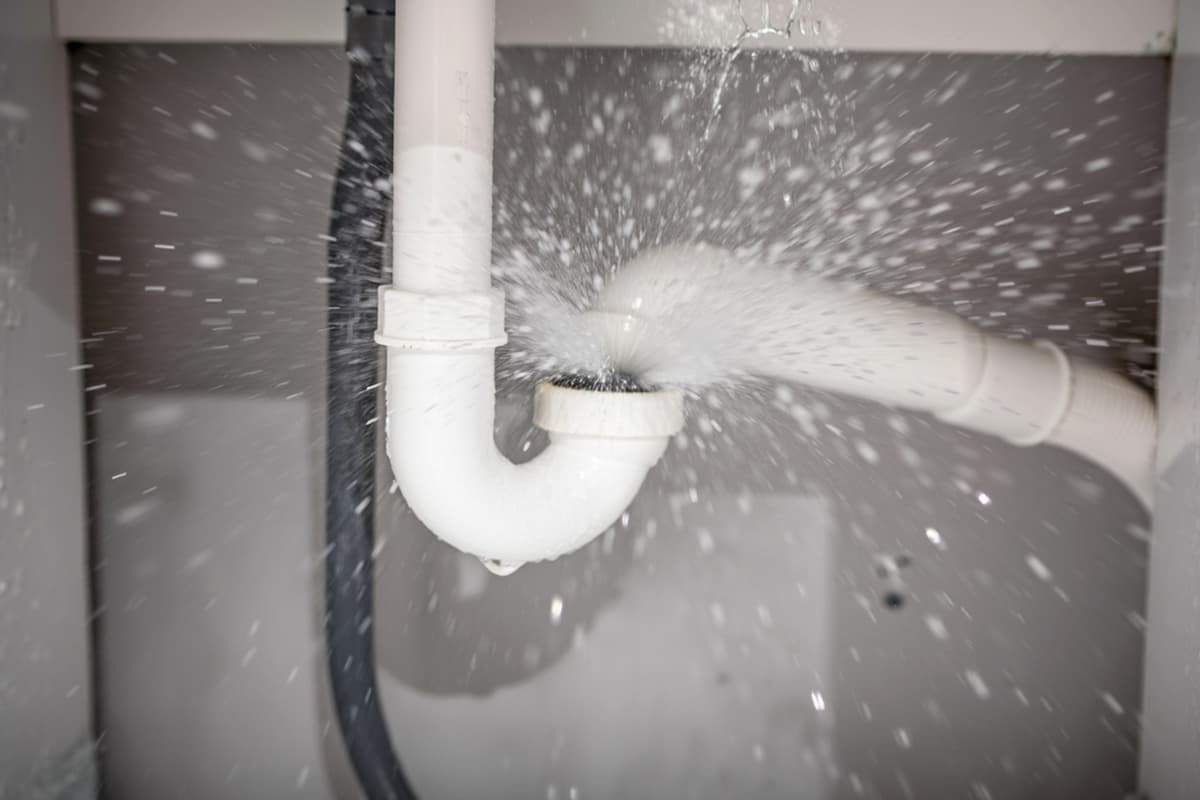
Not every instance of basement moisture originates from groundwater or structural failure. Internal plumbing leaks — from aging pipework, failed joints, or concealed supply lines running beneath floor slabs — can introduce significant volumes of water into a basement environment in ways that closely resemble external seepage.
The distinction matters enormously in terms of remediation. A homeowner who invests in expensive waterproofing membranes to address what appears to be hydrostatic seepage, without first ruling out a plumbing source, may find the problem persists entirely unchanged. Hidden plumbing leak detection should form part of any thorough assessment of basement moisture, particularly where dampness is localised, appears near service entry points, or fluctuates in line with water usage patterns.
Similarly, properties with ageing lead or cast-iron pipework beneath their floors face an elevated risk of slow, persistent leaks that go undetected for extended periods. Considering pipework replacement solutions for older infrastructure is a prudent step in comprehensive basement water management.
Basement Conversions and Lower-Ground-Floor Flats: Additional Considerations
The conversion of existing cellars into habitable basement spaces has become widespread across London, driven by planning constraints on upward extension and the premium placed on usable square footage. However, a cellar that functioned adequately as a storage space — tolerable as slightly damp — is held to an entirely different standard once it becomes a bedroom, office, or living area.
Many converted basements rely on tanking systems or cavity drainage membranes applied during conversion. These are effective when correctly specified and installed, but they require ongoing maintenance and are not indefinite guarantees against water ingress. Tanking systems applied to the negative face of a wall (interior face) manage water that has already penetrated the structure — they do not stop hydrostatic pressure acting on the building fabric itself. Lower-ground-floor flats in converted Victorian properties often inherit drainage arrangements that were never designed to accommodate the water management demands of a fully habitable space.
If prolonged water intrusion does reach the point of causing flooding or significant water damage, professional basement flood cleanup services can mitigate secondary damage — but the structural causes must still be identified and addressed to prevent recurrence.
Common Causes of Basement Water Intrusion at a Glance
| Cause of Basement Water Intrusion | How It Leads to Leaks |
|---|---|
| Hydrostatic pressure from saturated soil | Forces water through pores, joints, and cracks in foundation walls and floor slabs |
| Foundation wall cracks | Provide direct pathways for groundwater under pressure to enter the structure |
| Clay soil expansion and contraction | Cyclically stresses walls, widens joints, and damages drainage connections |
| Blocked or failed perimeter drainage | Causes water to accumulate around foundations, increasing ingress pressure |
| Impermeable hard landscaping | Concentrates surface water runoff at foundation level instead of dispersing it |
| Ageing or fractured underground pipework | Introduces water into surrounding soil adjacent to basement walls |
| Failed or deteriorated waterproofing membranes | Allows moisture to penetrate through previously protected surfaces |
| High seasonal water table | Raises groundwater to levels that exert sustained upward pressure on floor slabs |
Early Warning Signs and What They May Indicate
Identifying water intrusion early significantly reduces the cost and complexity of remediation. The following signs warrant prompt professional investigation rather than monitoring alone.
| Early Warning Sign | Potential Underlying Cause |
|---|---|
| White or grey powdery deposits on walls (efflorescence) | Mineral salts carried through concrete by water movement — indicates active seepage |
| Musty or earthy odour in the basement | Persistent elevated moisture levels, often preceding visible dampness |
| Damp or peeling paint on basement walls | Moisture migrating through the wall from the exterior |
| Discolouration or tide marks at floor-wall junction | Water ingress at the base of the foundation wall — often related to hydrostatic pressure |
| Condensation on pipes or walls during dry periods | May indicate internal plumbing leak rather than external water intrusion |
| Hairline cracks in walls that have grown over time | Foundation movement — potentially allowing increasing water ingress |
| Bubbling or lifting floor coverings | Sub-slab moisture pressure — may indicate rising groundwater or slab crack |
Prevention Strategies for London Basement Owners
Preventing basement water intrusion is considerably more cost-effective than remediating established water damage or structural deterioration. The following measures represent sound, evidence-based practice for property owners with below-ground spaces.
Maintain perimeter drainage. Ensure gutters, downpipes, and surface drainage channels are clear and directing water away from the building. Have underground drainage inspected periodically, particularly in older properties where clay pipes may have deteriorated.
Manage landscaping and hard surfaces. Avoid impermeable hard landscaping immediately adjacent to basement walls. Where possible, use permeable paving materials and ensure ground levels slope away from the building rather than toward it.
Monitor and address foundation cracks promptly. Small cracks addressed early are straightforward to manage. Cracks that are left to widen or multiply become more significant structural concerns. Do not assume a static-looking crack is inactive.
Consider subsoil drainage if appropriate. French drains or perimeter drainage systems installed at foundation depth can significantly reduce hydrostatic pressure in properties with persistent groundwater proximity. Professional assessment is needed to determine suitability.
Inspect internal plumbing regularly. Particularly in older properties, routine inspection of pipework beneath or adjacent to the basement slab can identify developing leaks before they cause significant moisture damage.
Review waterproofing systems in converted spaces. If your basement has been converted, understand what waterproofing system was installed, when it was last inspected, and whether maintenance is required. Cavity drainage systems require sump pump servicing; tanked systems should be checked for cracks or disbondment.
For holistic property water management, working with experienced home plumbing specialists who understand the relationship between internal infrastructure and basement moisture can provide both diagnostic clarity and practical remediation pathways.
Frequently Asked Questions
Why are basements more vulnerable to water leaks than other parts of a building?
Basements are surrounded by soil on multiple sides, sit at or below the water table seasonally, and receive concentrated surface water runoff. Unlike above-ground walls that shed water by gravity, basement walls face sustained inward pressure from groundwater and saturated soil — making water intrusion a structural risk rather than simply a weather event.
Does hydrostatic pressure affect all basements?
Yes, to varying degrees. Any below-ground structure surrounded by soil is subject to hydrostatic pressure when the surrounding ground is saturated. The intensity depends on depth, soil type, drainage conditions, and seasonal water table variation. London's clay soils make hydrostatic pressure a particularly relevant concern for the capital's basement properties.
Can basement waterproofing fail over time?
Yes. All waterproofing systems — including tanking, cavity drainage membranes, and cementitious coatings — have finite lifespans and require periodic inspection and maintenance. Changes in groundwater levels, structural movement, and general material deterioration can all compromise previously effective waterproofing.
Will basement water ingress affect my property's value?
Yes, significantly. Evidence of active or historic water intrusion is a red flag in property surveys and can depress valuations, complicate mortgage applications, and deter buyers. Addressing water ingress and obtaining documentation of remedial work is important for maintaining and protecting property value.
Is basement water intrusion covered by home insurance?
This depends on the policy and the cause. Sudden damage from burst pipes may be covered, but gradual ingress from groundwater, poor drainage, or structural deterioration is frequently excluded. Homeowners should review their policy carefully and consult their insurer before assuming coverage applies.
How often should basement drainage systems be inspected?
For properties with underground drainage adjacent to basements, an inspection every three to five years is a reasonable baseline. Older properties with clay pipework, or those where drainage problems have previously been identified, may benefit from more frequent CCTV drainage surveys.
Can I tell the difference between condensation and water seepage in a basement?
Condensation typically appears on cold surfaces during warm, humid conditions and reduces when ventilation improves. Seepage produces persistent damp patches regardless of season, often with associated efflorescence, tide marks, or musty odour. A moisture meter test across walls can help distinguish between surface condensation and moisture migrating through the substrate.
Are newer basement conversions less vulnerable to water leaks?
Not necessarily. Modern conversions are often better waterproofed at the time of installation, but they are still subject to the same hydrostatic pressures, drainage challenges, and soil conditions as older basements. The quality of the original waterproofing specification and ongoing maintenance are the more significant factors.
Can trees near a property affect basement water intrusion?
Yes. Tree roots can infiltrate and fracture underground drainage pipes, introducing water into the soil adjacent to foundations. Roots can also cause soil movement around basement walls. Large trees in close proximity to below-ground structures are worth monitoring and factoring into drainage maintenance planning.
What should I do if I notice water appearing in my basement for the first time?
Document where the water appears, when, and under what weather conditions. Establish whether it correlates with rainfall, specific appliance usage, or seasonal change. Seek a professional assessment from a drainage or plumbing specialist before committing to any remediation — identifying the source accurately is the essential first step.
Protecting Your Basement Starts with Understanding It
Water intrusion rarely announces itself loudly. It tends to develop gradually — a faint damp smell, a small patch of discolouration, a hairline crack that widens imperceptibly over months. By the time the problem becomes visible and disruptive, it has usually been developing for considerably longer.
If you have noticed any early signs of moisture in your basement, or if you are considering a basement conversion in a London property, understanding the underlying causes covered in this article is the most valuable first step. From there, exploring drainage improvements, plumbing inspections, and appropriate waterproofing strategies with experienced professionals gives you the clearest path to a dry, stable, and protected below-ground space.
For further guidance on drainage, plumbing infrastructure, or basement water management in London, start with this related article on residential water overflow causes, then get in touch to discuss your property's specific situation with a specialist.
Safety Disclaimer
The information provided in this article is intended for educational and informational purposes only. Basement water intrusion can result from a combination of structural, drainage, environmental, and plumbing-related factors that vary significantly between properties. The guidance presented here represents general principles and should not be treated as a substitute for professional assessment. Every property is different, and a qualified specialist should be consulted to identify the precise cause of water ingress and to determine appropriate remedial action for your specific circumstances.