Request Job Estimate
 Tap to Call
Overview
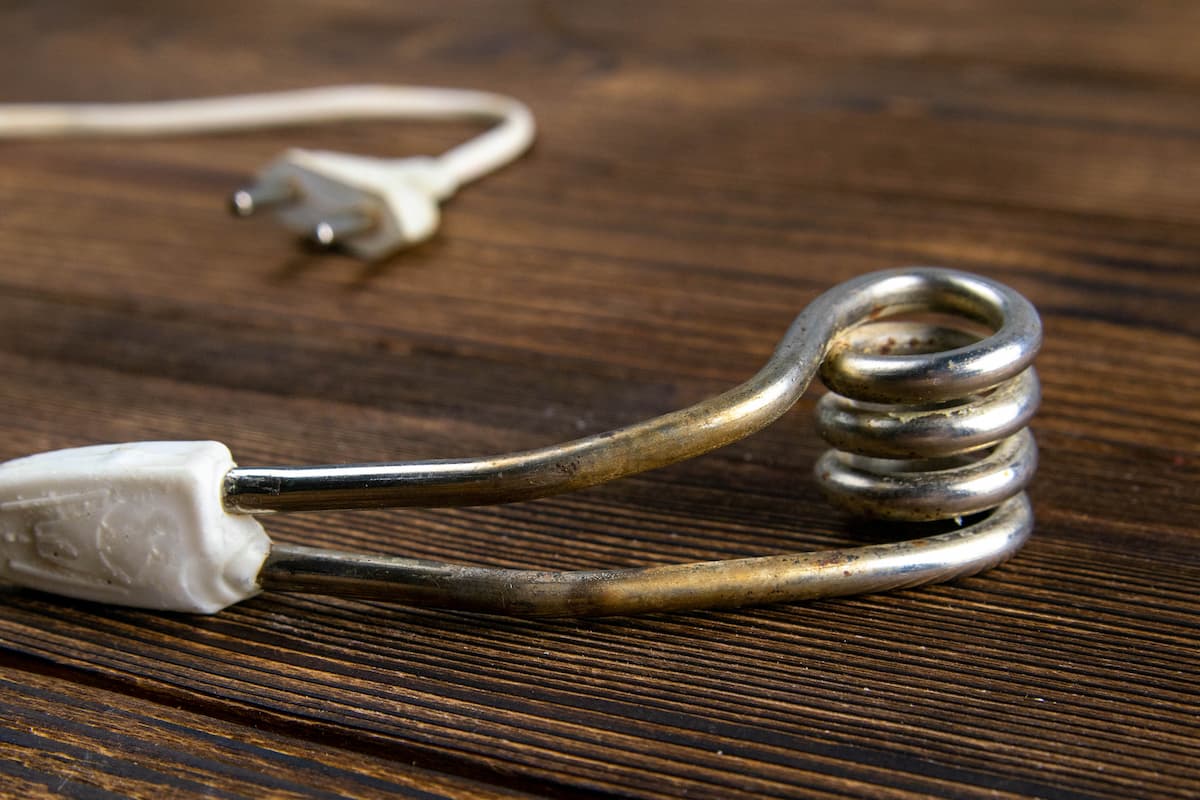
An immersion heater is one of the most common ways to produce domestic hot water in UK cylinder-based systems. It is simple in principle: an electric element sits inside the cylinder and heats stored water directly, while a thermostat controls temperature and safety cut-off. In many homes it acts as either the main heat source or a backup when the boiler is unavailable.
Understanding what an immersion heater is and how it works helps homeowners avoid misdiagnosis, reduce running costs, and respond faster to early warning signs like intermittent hot water, overheating, or repeated cut-outs.
Key Takeaways
- An immersion heater is an electric resistance element installed directly into a hot water cylinder.
- The core components are the heating element, thermostat, safety cut-out, and cylinder mounting point.
- Efficiency depends on usage pattern, insulation, thermostat setting, and tariff timing.
- Most recurring faults are linked to thermostat drift, limescale, wiring issues, or aged seals.
- Better controls and scheduled use can reduce cost without sacrificing comfort.
What Is an Immersion Heater?
An immersion heater is a self-contained electric water heater fitted into a hot water cylinder. Unlike a boiler heat exchanger, it transfers heat directly from the powered element into the stored water. That direct transfer is why immersion systems are straightforward, reliable, and common in flats, electric-only homes, and properties that need a dependable hot water backup.
In practice, many UK households use immersion heating in one of three ways:
- Primary source in all-electric homes.
- Backup source when boiler hot water is unavailable.
- Top-up source for specific demand periods.
If your property uses a cylinder setup, this links closely with hot water cylinder design and operation.
How an Immersion Heater Works Step by Step
The working principle is electrical resistance. When power reaches the element, resistance converts electrical energy into thermal energy. Heat moves through the metal sheath into surrounding water, and natural convection distributes warmth through the stored volume.
Typical operating cycle:
- Power is supplied from a fused, protected circuit.
- Thermostat checks current water temperature.
- If below set point, the thermostat closes the circuit.
- The element heats and transfers energy into nearby water.
- Warm water rises, cooler water sinks, and circulation continues.
- At target temperature, the thermostat opens the circuit.
- If temperatures become abnormal, the high-limit safety cut-out interrupts power.
This closed control loop is why immersions can maintain stable hot water without constant user intervention.
Expert Insight: Most homeowner complaints about "failed immersion heaters" are actually control or setup problems (timer, thermostat setting, or cylinder demand mismatch), not immediate element burnout.
Core Components and What They Do
| Component | Function | Typical Failure Impact |
|---|---|---|
| Heating element | Converts electricity into heat | No hot water or very slow recovery |
| Thermostat | Switches element on/off at target temperature | Overheating or lukewarm supply |
| High-limit cut-out | Safety shutdown during abnormal overheating | Repeated power interruption |
| Gasket and mounting boss | Seal and mechanical fixing to cylinder | Leaks around immersion point |
| Wiring and terminal housing | Delivers safe electrical connection | Intermittent heating or trip events |
For property-specific installation and maintenance context, see immersion heater service guidance.
Common Immersion Heater Types in UK Homes
Most residential systems use standard screw-in elements, but the installed type depends on cylinder specification and legacy fittings. Dual-element arrangements are also used where off-peak and boost strategies are required.
| Immersion Type | Typical Use Case | Advantage | Limitation |
|---|---|---|---|
| Screw-in element | Standard domestic cylinders | Widely available and serviceable | Must match boss size and cylinder spec |
| Flange-mounted element | Older/specialist cylinders | Compatible with non-standard openings | More specific replacement parts |
| Twin-element setup | Off-peak plus daytime boost strategy | Better demand control | More complex control configuration |
| Inline/specialist immersion | Niche or commercial process systems | Targeted heating application | Rare in typical domestic cylinders |
Efficiency and Running Cost: What Matters Most
Homeowners often ask whether immersion heaters are "expensive." The better question is: how is the system being used?
Efficiency is shaped by four practical factors:
- Thermostat setting – overly high settings increase heat loss and scaling risk.
- Cylinder insulation quality – poor insulation forces more reheating cycles.
- Tariff timing – scheduled off-peak heating can materially reduce cost.
- Demand behaviour – frequent top-ups can be less efficient than planned heating windows.
Where cylinders are vented or unvented, controls and maintenance expectations differ. That broader context is explained in vented vs unvented hot water cylinder systems.
Expert Insight: A correctly sized cylinder with accurate thermostat control usually outperforms a larger, poorly controlled system in real household energy use.
Typical Faults and Early Warning Signs
Most immersion issues develop gradually rather than failing overnight. Early signals usually include one or more of the following:
- Water takes longer to heat than before.
- Water turns very hot or unpredictably lukewarm.
- Hot water runs out much faster than normal.
- Safety cut-out trips repeatedly.
- Moisture or minor leakage appears near the immersion fitting.
These symptoms are often grouped by homeowners as generic hot water problems, but accurate diagnosis depends on checking controls, element condition, cylinder demand, and wiring integrity together.
Maintenance and Good Practice for Homeowners
You do not need to service electrical immersion components yourself to improve reliability. Good outcomes usually come from consistent observation, sensible settings, and timely professional intervention.
Recommended homeowner actions:
- Keep thermostat settings moderate and stable.
- Track how long water takes to recover after typical usage.
- Note patterns (morning-only hot water, evening failures, random cut-outs).
- Check for visible moisture around immersion mounting points.
- Schedule professional checks for recurring faults rather than repeated resets.
If multiple plumbing symptoms are appearing at once, coordinated diagnosis through home plumbing support is usually faster than piecemeal repairs.
Repair vs Replacement: How to Decide
Not every fault requires full replacement. In many homes, targeted component replacement (thermostat, element, seal, or controls) restores normal operation quickly.
General decision framework:
- Repair is often suitable for first-time faults with otherwise stable performance.
- Escalated diagnosis is better when cut-outs, overheating, and inconsistent water recur.
- Replacement becomes practical when faults repeat in short cycles or reliability remains poor after quality repair.
The best choice should account for cylinder condition, occupancy pattern, and how often your household actually needs high-volume hot water.
Frequently Asked Questions
What is an immersion heater in simple terms?
It is an electric element fitted inside a hot water cylinder. When powered, it heats the stored water directly, and a thermostat controls when it switches on and off.
How does an immersion heater heat water?
Electric current passes through a resistive element, creating heat. That heat transfers into surrounding water, and convection spreads warmth through the cylinder until the thermostat reaches the set temperature.
Are immersion heaters expensive to run?
They can be if poorly controlled. Costs are usually lower when cylinder insulation is good, thermostat settings are sensible, and heating is scheduled around demand and tariff timing.
What causes an immersion heater to stop working?
Common causes include failed elements, faulty thermostats, tripped high-limit cut-outs, loose wiring, or limescale-related performance loss. Accurate diagnosis is important before replacing parts.
How long does an immersion heater usually last?
Lifespan varies by water quality, usage intensity, and control quality. In many homes, elements and thermostats provide years of service but may need earlier attention in hard-water areas.
Should I repair or replace a faulty immersion heater?
If faults are isolated, repair is often enough. If problems repeat, performance stays unreliable, or multiple parts are failing, replacement may be the better long-term option.
Safety Disclaimer
This content is for educational purposes only. Immersion heaters involve mains electricity and stored hot water systems. Electrical testing, component replacement, and safety checks should be carried out by appropriately qualified professionals.
Learn More
If you are comparing repair and replacement options, start by documenting your hot water pattern, cylinder type, and recent fault behaviour. With that information, a qualified engineer can recommend the safest and most cost-effective next step for your home.