Request Job Estimate
 Tap to Call

Overview
Choosing the best radiators for your home is one of the most practical decisions you can make for long-term comfort, energy efficiency, and reliable heating performance. The radiator market in the UK has expanded considerably, offering everything from traditional column styles to sleek designer panels, and selecting the wrong type — or the wrong size — can leave rooms cold, inflate running costs, and place unnecessary strain on your central heating system. Whether you are upgrading an older property, renovating a kitchen extension, or simply replacing a tired radiator that has seen better days, understanding the key differences between radiator types, heat output ratings, and installation requirements will help you invest wisely. This guide covers everything London homeowners need to know.
Key Takeaways
- ✓ Matching BTU output to the room's actual heating requirement is the single most important factor — a poorly sized radiator underperforms regardless of quality
- ✓ Column radiators are particularly well-suited to Victorian and Edwardian London properties and work effectively at the lower flow temperatures of modern heating systems
- ✓ Older, poorly insulated rooms require significantly higher BTU output than modern equivalents — address fabric insulation before upsizing the radiator
- ✓ Fitting a new radiator onto a sludge-contaminated system without flushing first will reduce its performance and lifespan prematurely
- ✓ A like-for-like radiator replacement typically costs £200–£600 including labour; replacing all radiators in a London house averages £1,400–£3,500+
What Makes a Good Radiator?
A good radiator delivers consistent, even heat distribution across a room without overworking your boiler. The most important performance indicator is the BTU (British Thermal Unit) output — a measurement of how much heat a radiator can produce. Matching the BTU output to the size, insulation level, and purpose of a room is fundamental. A radiator that is too small will struggle to heat the space effectively; one that is too large will cycle inefficiently and may cause the boiler to short-cycle, reducing its lifespan.
Beyond heat output, build quality matters. Radiators manufactured from mild steel are standard across UK homes and offer a good balance of thermal efficiency and affordability. Cast iron radiators retain heat longer after the boiler switches off, which can be beneficial in larger reception rooms. Aluminium radiators heat up quickly and are a popular choice for modern heating systems, including those paired with heat pumps or condensing boilers operating at lower flow temperatures.
When planning an upgrade, consulting professional radiator installation services at the outset helps ensure the correct radiator type and sizing is specified for each room — avoiding costly mistakes later.
Types of Radiators Available in the UK
Understanding the main radiator categories helps narrow down the right choice for each room and property type.
Panel Radiators (Compact Radiators)
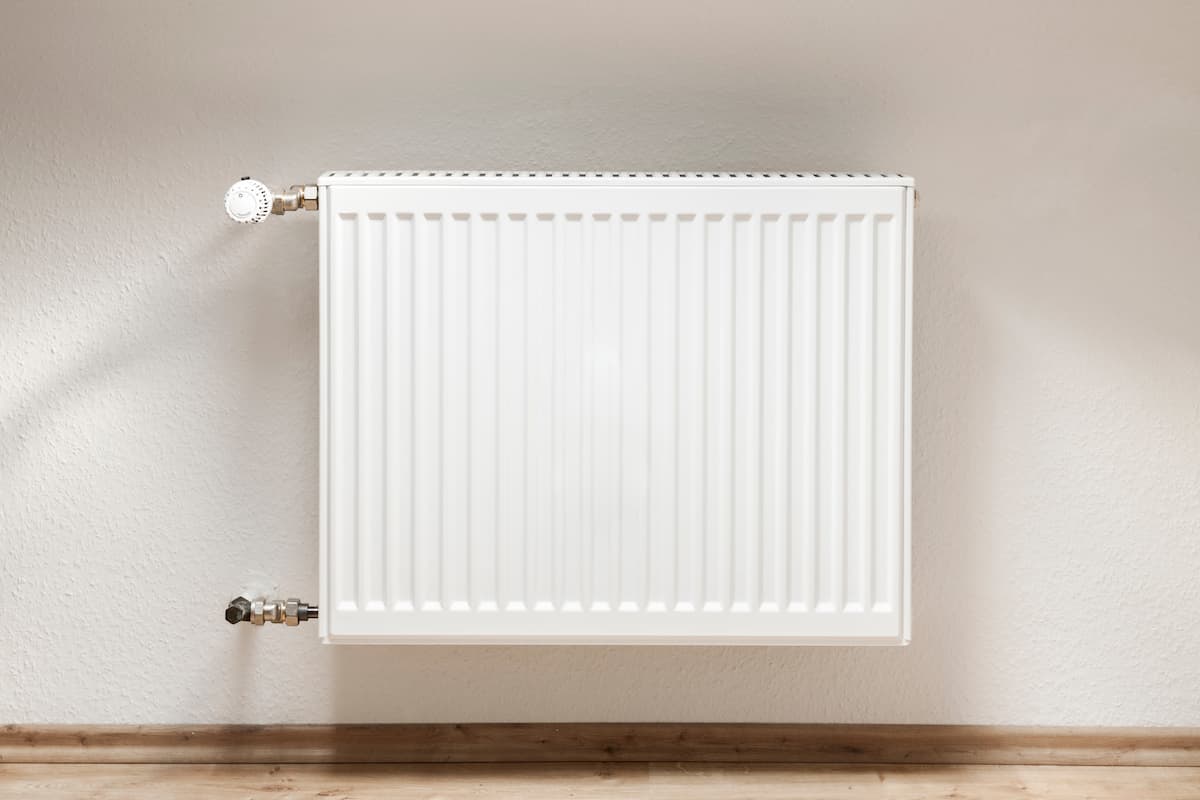
Panel radiators — often referred to as compact radiators — are the most widely installed type in UK homes. Available in single panel (Type 11), double panel (Type 21 or 22), and double panel with double convector fins, they offer flexible heat output options in a relatively slim profile. They are practical, affordable, and well-suited to most rooms.
Column Radiators
Column radiators are experiencing a significant revival across London properties, particularly in Victorian and Edwardian homes where original cast iron columns once stood. Modern column radiators are typically manufactured from mild steel and are available in both vertical and horizontal configurations. They deliver excellent heat output, offer a period-appropriate aesthetic, and work well at lower flow temperatures — an important consideration if you are planning or have recently had a new boiler fitted.
Designer Radiators
Designer radiators prioritise aesthetics alongside function. Flat panel, mirror, towel rail, and vertical slab-style radiators fall into this category. They are popular in modern flats, open-plan living spaces, and refurbished properties where visual impact matters. The key risk with designer radiators is choosing appearance over performance — a common mistake that leaves homeowners disappointed when a stylish vertical radiator fails to adequately heat a medium-sized bedroom.
Towel Rail Radiators
Towel rail radiators are standard in UK bathrooms and are available in ladder, flat bar, and curved designs. They serve a dual purpose: heating the room and drying towels. For bathrooms, always ensure the BTU output is sufficient to heat the room independently — do not rely on a towel rail to heat a poorly insulated bathroom adequately.
Long Radiators
A long radiator — typically a low-profile, wide horizontal unit — suits rooms where wall space is limited in height but plentiful in width. They are a practical solution under wide windows, in conservatories, and in loft conversions with sloping ceilings.
Radiator Type vs Best Use Case
| Radiator Type | Best Use Case |
|---|---|
| Panel (Compact) Radiator | Bedrooms, kitchens, utility rooms, general use |
| Column Radiator | Victorian/Edwardian properties, hallways, reception rooms |
| Designer/Vertical Radiator | Modern flats, open-plan spaces, feature walls |
| Towel Rail Radiator | Bathrooms, en-suites, cloakrooms |
| Long (Low-Profile) Radiator | Under wide windows, conservatories, loft rooms |
| Cast Iron Radiator | Period properties, rooms requiring long heat retention |
Best Radiators for Different Rooms
Living Rooms: A double panel convector radiator or a traditional column radiator works well in most London living rooms. For period properties, column radiators complement the architecture while delivering strong heat output.
Bedrooms: Single or double panel radiators are practical and cost-effective. Oversizing bedrooms is a common mistake — use a BTU calculator or ask a heating engineer to confirm sizing before purchasing.
Bathrooms: A chrome or anthracite ladder towel rail radiator suits most bathrooms, but ensure the output is adequate. Dual-fuel towel rails — which can operate on the central heating system or independently via an electric element — are particularly useful during warmer months when the boiler is off.
Kitchens: Compact panel radiators are the practical choice. Avoid over-sizing, as kitchens generate their own heat from appliances.
Hallways: Vertical column radiators save floor and wall space in narrow hallways while providing sufficient heat output for draughty front entrances — a persistent challenge in many older London terraced houses.
Radiator Sizing Principles
Radiator sizing is not guesswork. The BTU requirement for a room depends on:
- Room dimensions (length, width, and ceiling height)
- Number of external walls
- Window size and glazing type
- Insulation quality
- Room use and desired temperature
A standard living room in an uninsulated Victorian terrace may require 30–40% more heat output than the same room in a modern insulated flat. Older London properties — particularly those without cavity wall insulation or double glazing — consistently require higher-output radiators than their modern counterparts.
Attempting to compensate for a cold, under-insulated room by fitting a larger radiator without addressing insulation is a short-term fix. Addressing the building fabric first will reduce the BTU requirement and allow a more appropriately sized radiator to work efficiently.
Expert Insight
In older London properties — Victorian and Edwardian terraces in particular — heat loss through solid walls and single-glazed windows is substantially higher than in modern insulated builds. Matching BTU output to the actual heat loss of the room, rather than to its dimensions alone, is the most reliable route to consistent heating performance. A heating engineer can calculate this directly for each room if you are unsure.
Efficiency Considerations
Modern radiators are more efficient than their predecessors primarily because of improved manufacturing tolerances and compatibility with condensing boilers and low-temperature heating systems. However, the radiator itself does not directly determine energy efficiency — the boiler, controls, and pipework system as a whole govern how efficiently heat is generated and distributed.
Thermostatic radiator valves (TRVs) fitted to each radiator allow individual room temperature control, preventing energy waste in unoccupied rooms. Ensuring that TRVs are functioning correctly and that the heating system is properly balanced across all radiators improves overall heating performance.
If your radiators are cold at the bottom and warm at the top, or vice versa, this often indicates sludge build-up within the system. Central heating power flushing can remove accumulated sludge and debris, restoring heat distribution and improving efficiency without the cost of full radiator replacement.
When to Replace a Radiator
Radiators in well-maintained central heating systems can last 15–25 years, but several signs suggest replacement may be the better option over repair:
- Persistent cold spots that do not resolve after bleeding or power flushing
- Visible corrosion, pinhole leaks, or weeping joints
- Significant external rust or physical damage
- Radiators that consistently underperform despite the boiler and system operating correctly
- Aesthetic upgrade as part of a wider property renovation
For radiators displaying minor issues — such as small leaks, sticking valves, or isolated cold spots — radiator repair and maintenance is often the more cost-effective route before committing to full replacement.
Radiator Installation and Replacement Costs
Radiator costs in the UK vary considerably depending on the type of radiator, the complexity of the installation, whether pipework modifications are required, and whether you are replacing an existing unit or installing in a new position.
As a general guide:
- A standard panel radiator costs between £50 and £300 depending on size and specification.
- Designer and column radiators typically range from £150 to £800+.
- Labour costs for a like-for-like radiator replacement generally range from £150 to £300 per radiator.
- Installing a radiator in a new position, requiring new pipework runs, increases the cost significantly.
Replacing all radiators in a typical London house (7 radiators) can cost anywhere from £1,400 to £3,500+ including both supply and labour, depending on the radiator specification chosen and the complexity of the installation. Properties with older, smaller-bore pipework may require additional work to ensure adequate flow rates to larger modern radiators.
Factors Affecting Radiator Installation and Replacement Costs
| Cost Factor | Impact on Price |
|---|---|
| Radiator type and specification | Higher-spec radiators increase material costs |
| Like-for-like vs new position | New pipework runs significantly increase labour |
| Property age and pipework condition | Older systems may need modifications |
| Number of radiators being replaced | Multiple replacements may attract reduced per-unit labour |
| Access difficulty | Restricted spaces or solid floors increase time and cost |
| TRV and valve replacement | Adds modest cost but improves long-term performance |
| System flushing requirement | Recommended with full replacements; adds to overall cost |
Whole-System Heating Upgrades
Replacing radiators as part of a broader heating upgrade — including a new boiler, updated controls, or a full system redesign — requires careful planning. Radiator sizing and type selection must align with the new boiler's operating temperatures and flow rates. Heat pumps, in particular, operate at lower flow temperatures than traditional gas boilers and work most effectively with larger-surface-area radiators or underfloor heating alternatives.
If you are considering a complete heating overhaul, reviewing central heating installation considerations before specifying radiators ensures the entire system operates efficiently rather than creating a mismatch between components.
How to Choose the Right Radiator: A Practical Selection Guide
- Calculate the BTU requirement for each room before browsing radiators.
- Choose the radiator type that suits the room's purpose, aesthetics, and wall space.
- Consider your boiler type — heat pumps and low-temperature systems benefit from larger output radiators.
- Check valve compatibility — new radiators should be fitted with TRVs unless in a room with a wall thermostat.
- Factor in installation complexity — new positions, solid walls, or concrete floors increase cost and planning time.
- Do not select on aesthetics alone — confirm heat output is adequate before committing to a designer specification.
Common Radiator Mistakes to Avoid
Choosing a radiator purely on aesthetics is the single most common mistake in renovation projects. A beautifully specified vertical designer radiator may look impressive in a living room but deliver inadequate heat output for the room's actual requirements. Always verify BTU output against the calculated room requirement.
Equally, over-sizing radiators — believing bigger is always better — can cause issues with system balancing and boiler efficiency. A properly balanced system with correctly sized radiators outperforms an oversized, poorly balanced arrangement every time.
Finally, neglecting the condition of the existing system when fitting new radiators is a costly oversight. Fitting a new radiator onto a sludge-contaminated system without flushing will reduce the new radiator's performance and lifespan prematurely.
Long-Term Radiator Performance
Once installed, radiators require relatively little attention, but periodic maintenance protects both performance and longevity. Annual bleeding to remove trapped air, regular checks of TRV function, and periodic inhibitor top-ups within the central heating system keep radiators operating effectively. For a comprehensive approach, ongoing radiator maintenance services can identify developing issues before they become costly problems.
Frequently Asked Questions
How much does it cost to replace a radiator in the UK?
A like-for-like radiator replacement typically costs between £150 and £300 in labour, plus the cost of the radiator itself (£50–£800+ depending on type). Total costs per radiator generally range from £200 to £600. Properties requiring pipework modifications will see higher costs.
How much does it cost to replace 7 radiators in a UK home?
Replacing 7 radiators in a typical London house generally costs between £1,400 and £3,500+, including supply and labour. The final figure depends on radiator specification, system condition, and whether any pipework modifications are required.
How long do radiators last?
Most radiators in well-maintained central heating systems last between 15 and 25 years. Regular inhibitor use, system flushing, and prompt repair of minor leaks extend lifespan considerably.
Which radiator type is most efficient?
Radiator efficiency is closely tied to the heating system it operates on. Aluminium radiators heat quickly and suit low-temperature systems well. Cast iron retains heat longer. Panel radiators offer good all-round performance for standard gas-heated systems.
Is it worth replacing old radiators?
Yes, in most cases. Older radiators often suffer from internal corrosion and reduced heat output. Replacing them as part of a system refurbishment, alongside a power flush and new TRVs, typically delivers noticeably improved heating performance.
Can I fit a radiator in a new position myself?
Pipework modifications to relocate a radiator involve working on a pressurised central heating system and should be carried out by a qualified heating engineer. Incorrect installation can result in leaks, system pressure loss, and damage.
What size radiator do I need for a bedroom?
Radiator sizing depends on room dimensions, insulation, and ceiling height. A 10–12m² bedroom in a modern insulated property typically requires 2,500–3,500 BTU. Older, poorly insulated rooms will require higher outputs.
Should I replace my radiator valves when fitting new radiators?
Yes. Fitting new thermostatic radiator valves alongside new radiators is strongly recommended. Old valves can fail, leak, or provide inaccurate temperature control, reducing the benefit of a new radiator installation.
What is the difference between a Type 21 and Type 22 radiator?
A Type 21 radiator has two panels and one convector fin; a Type 22 has two panels and two convector fins. Type 22 delivers higher heat output and is suitable for rooms with greater heating demands.
Do designer radiators heat as well as standard panel radiators?
They can, provided the BTU output matches the room's requirement. The risk with designer radiators is selecting based on appearance without verifying the output specification — always check BTU ratings before purchasing.
Ready to Upgrade Your Radiators?
If you are planning a radiator replacement, considering a full heating upgrade, or simply want professional advice on the best radiators for your London property, speaking to a qualified heating engineer before purchasing can save considerable time and expense. The right specification, correctly installed, will deliver reliable comfort for years to come.
Explore our professional radiator installation services to learn more, or get in touch for tailored advice on your heating project.
Safety Disclaimer
The information provided in this article is intended for educational and informational purposes only. Heating system performance, radiator suitability, installation requirements, and replacement considerations vary significantly between properties. All heating modifications, radiator installations, and system adjustments should be assessed and carried out by a qualified and experienced heating engineer. Do not attempt to modify pressurised central heating pipework without the appropriate qualifications and experience.