Request Job Estimate
 Tap to Call

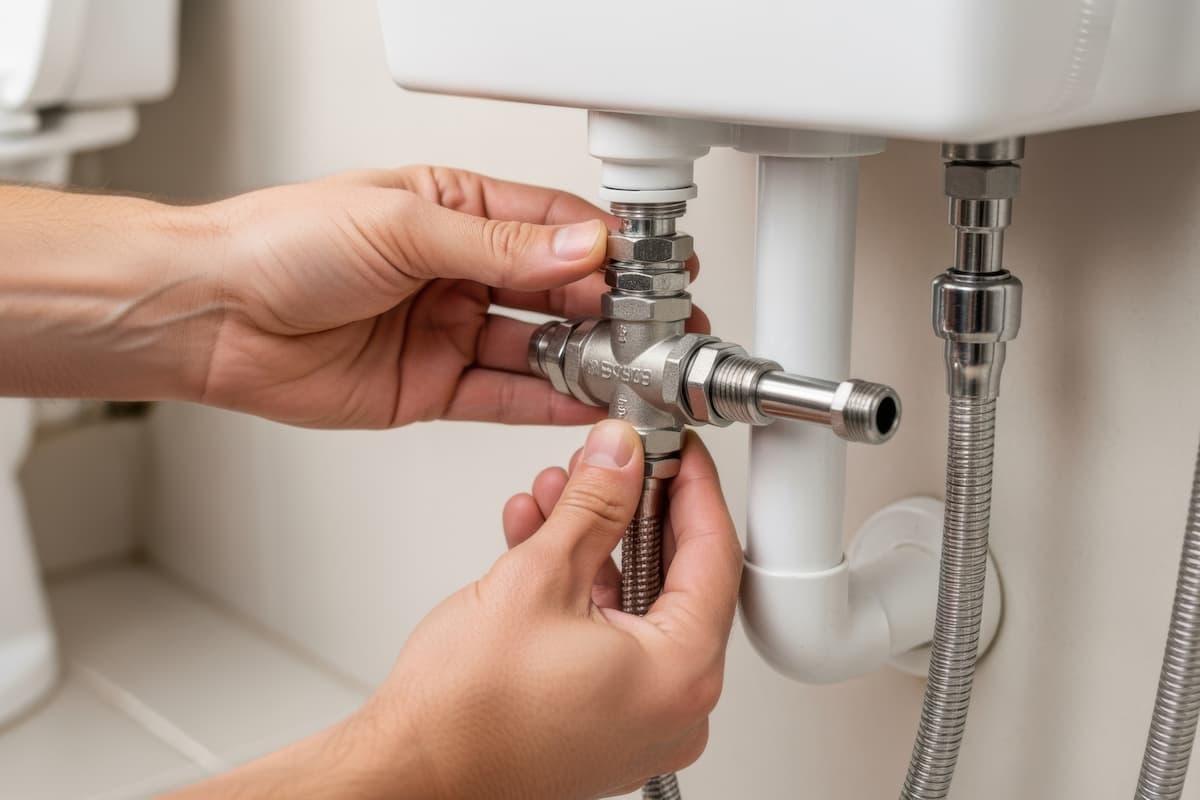
An airlock in water pipes occurs when a pocket of trapped air becomes lodged within the pipework, interrupting the normal flow of water through your plumbing system. Unlike a blockage caused by limescale or debris, an airlock is invisible — yet its effects on household plumbing performance can be just as disruptive. In UK homes, particularly older properties with gravity-fed water systems, trapped air is one of the most frequently misdiagnosed causes of low water pressure, spluttering taps, and sudden hot water failures. Understanding the airlock in water pipes effects helps homeowners identify problems early, respond appropriately, and avoid unnecessary expense on repairs that may not address the underlying issue.
Key Takeaways
- ✓ An airlock forms when trapped air creates a barrier inside pipework, disrupting or stopping water flow entirely
- ✓ Spluttering taps, low water pressure, and sudden hot water loss are the three most recognisable symptoms
- ✓ Gravity-fed systems are most vulnerable — they rely on tank head pressure with no mechanical force to push air through pipes
- ✓ Hot water absent while cold water works normally is a strong diagnostic indicator of an airlock in the hot water circuit
- ✓ Persistent or recurring airlocks signal a systemic fault requiring professional investigation rather than repeated DIY fixes
What Is an Airlock in Water Pipes?
An airlock forms when air becomes trapped inside a section of pipework and cannot escape through normal water flow. Rather than being flushed out of the system, the air pocket sits within the pipe and acts as a barrier — partially or completely blocking the passage of water.
Water, unlike air, cannot compress. When flowing water encounters a trapped air pocket in a pipe, it cannot simply push past it. Instead, the flow is disrupted, reduced, or stopped entirely depending on the size and location of the blockage. In pressurised mains-fed systems, the disruption may be partial. In gravity-fed systems — where water relies on the head pressure created by a cold water storage tank — even a small air pocket can bring flow to a halt.
For homeowners dealing with unexplained plumbing faults, professional airlock diagnosis and repair services can confirm whether trapped air is responsible before any work begins.
How Does Trapped Air Get Into Pipework?
Air enters domestic water systems through a number of routes, most of which are linked to how and when the plumbing is used, maintained, or altered.
Drainage and refilling: Whenever a pipe, cylinder, or storage tank is drained — whether for maintenance, repairs, or accidental emptying — air replaces the water. If the system is refilled too quickly or without adequate bleeding, air pockets become trapped in high points within the pipework.
Low water pressure events: If mains pressure drops temporarily — something that can occur during supply interruptions or heavy demand periods across a street or building — air can be drawn into the system. This is particularly relevant in converted flats across London, where multiple properties may share supply infrastructure.
Poorly designed or ageing pipework: In Victorian and Edwardian properties, pipework often follows unconventional routes through walls and floors. Horizontal pipe runs, incorrect gradients, and long lateral sections can all create conditions where air accumulates rather than escaping upward through the system.
Post-repair airlocks: Plumbing work that involves opening or modifying pipework almost always introduces air. If the system is not bled properly after the work is completed, airlocks can form within days of a repair — leading homeowners to believe the original problem has returned when in fact a new fault has been introduced.
Storage tank issues: Properties with cold water storage tanks in the loft — a common arrangement in older London homes — are particularly susceptible to airlocks forming when tank levels drop too low or when the ball valve malfunctions, allowing the tank to drain further than intended.
The Effects of an Airlock in Water Pipes: What Actually Happens
Reduced or Interrupted Water Flow
The most immediate and obvious airlock in water pipes effect is a reduction in water flow. Taps that previously delivered a strong, consistent stream begin to run slowly, intermittently, or not at all. The disruption is caused by the air pocket acting as a physical barrier within the pipe.
In some cases, flow is not completely blocked — it is simply inconsistent. Water may run normally for a few seconds before slowing or stopping as the air pocket shifts within the pipe. This intermittent behaviour is one of the clearest diagnostic indicators that air, rather than a blockage or pressure fault, is responsible.
Spluttering and Gurgling Taps
Spluttering taps are one of the most recognisable symptoms of airlock in plumbing systems. When water and trapped air compete for space within a pipe, the result is an uneven, sputtering flow — often accompanied by a distinct gurgling or hissing sound. The tap may release bursts of air alongside the water, sometimes with enough force to cause minor splashing.
This symptom is frequently misattributed to faulty tap washers or aerator blockages. While these can cause similar behaviour, spluttering that affects multiple taps or outlets simultaneously is almost always a systemic issue, and airlocks are among the most common causes.
Low Water Pressure Caused by Airlock
Airlock in pipes low water pressure is a well-established relationship in domestic plumbing diagnostics. The trapped air reduces the effective bore of the pipe, restricting the volume of water that can pass through. The result is noticeable pressure loss at the outlet — whether that is a tap, shower, or appliance.
This is especially significant in gravity-fed systems, where the available pressure is already limited by the height difference between the cold water storage tank and the outlet. A modest air pocket in a gravity-fed supply pipe can reduce pressure at a shower to the point of being practically unusable. Homeowners experiencing this often invest in shower pumps or pressure regulators without ever addressing the underlying airlock. For properties experiencing persistent water pressure performance problems, an airlock assessment should always be considered before any hardware changes are made.
| Airlock Symptom | Possible Effect on Plumbing Performance |
|---|---|
| Spluttering or gurgling taps | Intermittent water delivery, air ejected with flow |
| Reduced flow at one outlet | Partial airlock in dedicated supply pipe |
| No flow at multiple outlets | Significant airlock in main distribution pipe |
| Low shower pressure | Gravity-fed supply compromised by trapped air |
| Slow to fill bath or cistern | Restricted supply line, possible high-point airlock |
| Banging or hammering pipes | Air movement under pressure causing pipe stress |
No Hot Water Due to Airlock
One of the more serious and disruptive effects of an airlock is the complete or partial loss of hot water supply. When trapped air sits within the hot water distribution pipework — or within the hot water cylinder circuit itself — the flow of heated water to taps and showers is interrupted.
In properties with a conventional vented cylinder (common in older London houses), hot water is distributed through pipework that rises from the top of the cylinder. If air accumulates at this high point, it can stop hot water delivery entirely while cold water taps continue to function normally. This pattern — cold water functioning, hot water absent — is a strong diagnostic signal pointing toward an airlock in the hot water circuit rather than a boiler or cylinder fault.
Many homeowners in this situation assume their boiler has failed and arrange an engineer visit, only to find the heating equipment is working correctly. Exploring common hot water system issues before drawing conclusions about your boiler can save both time and unnecessary call-out costs.
Gravity-Fed System Airlock Problems
Gravity-fed water systems — found extensively in Victorian terraces, Edwardian semis, and older converted flats across London — are disproportionately affected by airlocks. Because these systems rely on the physical height of the cold water storage tank to generate pressure, they have no mechanical force to push air through the pipes. The water simply stops moving when air is in the way.
The typical storage tank is located in the loft or upper cupboard. Supply pipes run downward from the tank to serve bathrooms, showers, and hot water cylinders on lower floors. Any air that enters these pipes at a high point — whether through a low tank level, faulty ball valve, or post-repair introduction — is likely to stay there until it is actively removed.
Homeowners in these properties often notice that water flow partially restores if the cold water tank is filled to a higher level, only to drop again once the tank level falls. This temporary improvement occurs because additional head pressure momentarily forces air through the system — but without proper bleeding, the underlying pocket remains.
Airlock Effects on Central Heating Systems
While most homeowners associate airlocks with the domestic water supply, they also affect central heating systems. Trapped air within radiator circuits prevents hot water from circulating properly, leading to cold spots — particularly at the top of radiators — and uneven heat distribution throughout the property.
Airlock in central heating system water pressure can also cause the system pressure to fluctuate, triggering low-pressure warnings on modern boilers. In sealed heating systems, this may result in the boiler locking out entirely. Radiators that are persistently cold at the top, even after bleeding, may indicate a more deeply seated airlock within the primary circuit pipework rather than simply within the radiator itself.
Identifying the Warning Signs: A Diagnostic Overview
Recognising the symptoms of airlock in plumbing systems requires attention to patterns rather than isolated events. A single splutter from a tap on a cold morning is rarely significant. A pattern of spluttering across multiple outlets, combined with low pressure or hot water disruption, warrants closer investigation.
Key warning signs to look for:
- Taps that splutter, spit, or gurgle when first turned on
- Cold water working normally while hot water is absent or weak
- Shower pressure that has dropped without any change to the supply
- Radiators that remain partially cold despite the boiler functioning
- Unusual banging or hammering sounds from pipework during or after water use
- Flow that is strong initially but diminishes after a few seconds
It is worth noting that airlocks do not always produce dramatic symptoms. In some cases, the effect is simply a slow, quiet degradation in plumbing performance over weeks or months — subtle enough that homeowners adjust their expectations rather than identifying a fault. This gradual presentation is common in older properties where pipework runs through inaccessible voids and the air pocket shifts position over time.
For homeowners unsure whether their symptoms point to an airlock or another plumbing issue, diagnosing plumbing problems accurately is an essential first step before any work is carried out.
| Airlock Problem | Potential Consequence |
|---|---|
| Air in hot water supply pipe | Loss of hot water at taps and showers |
| Air in gravity-fed shower supply | Severely reduced shower pressure |
| Air in radiator circuit | Cold spots, uneven heating, boiler lock-out |
| Air in cold supply to cylinder | Cylinder fails to refill correctly |
| Air in mains-connected pipe | Intermittent pressure loss at multiple outlets |
Common Myths and Misconceptions About Airlocks
Several persistent misconceptions complicate how homeowners understand and respond to airlocks.
"If the boiler is working, hot water cannot be affected by an airlock." This is incorrect. The boiler's function is separate from the delivery of hot water through the distribution pipework. An airlock between the cylinder and the outlet will prevent hot water from reaching the tap regardless of boiler operation.
"Low water pressure always means a mains supply problem." Mains pressure issues are one cause, but an airlock in the distribution pipework can produce identical symptoms. Checking whether the pressure loss is localised to specific outlets — rather than property-wide — helps distinguish between the two.
"Airlocks always fix themselves." In pressurised systems, air pockets do sometimes work their way out through outlets over time. In gravity-fed systems, this is far less likely. Without active intervention, a gravity-fed airlock can persist indefinitely.
"Bleeding a radiator will resolve a heating circuit airlock." Bleeding individual radiators addresses air trapped within that radiator. A deeper airlock within the primary pipework requires a different approach and may not be resolved by standard radiator bleeding.
When to Seek Professional Plumbing Advice
Many airlocks can be resolved through simple procedures — attaching a hose between the hot and cold outlets at an affected tap is a well-known DIY method, for example. However, persistent airlocks, those affecting multiple circuits, or those occurring in complex pipework arrangements are better assessed by a qualified plumber.
Properties with concealed pipework, sealed heating systems, or combined hot and cold supply configurations should not have the system tampered with unless the layout is clearly understood. Introducing further air, or creating an imbalance in a sealed system, can compound the original problem. Professional home plumbing support is advisable where the symptom pattern is unclear or where DIY attempts have not resolved the issue.
Getting the Diagnosis Right
Before concluding that an airlock is responsible for any plumbing fault, it is worth ruling out alternative explanations. Leaking pipework can present with some similar symptoms — reduced flow and low pressure — and it is important not to overlook a developing leak simply because an airlock appears more likely. Understanding the difference between a leak and an airlock can prevent misdiagnosis and ensure the correct remedy is applied.
When symptoms are accurately attributed to trapped air — rather than to the boiler, the mains supply, or the tap itself — the path to resolution is significantly clearer and often far less expensive.
Frequently Asked Questions
What are the main effects of an airlock in water pipes?
An airlock disrupts water flow by trapping air within the pipework, acting as a barrier between the supply and the outlet. The main effects include reduced water pressure, spluttering or sputtering taps, intermittent flow, and in some cases a complete loss of hot water supply through affected circuits.
Can an airlock stop water completely?
Yes. In gravity-fed systems especially, a sufficiently large air pocket can halt water flow entirely through the affected pipe. Mains-fed supplies are less likely to experience complete stoppage, but significant flow restriction is common even in pressurised systems.
Why do my taps splutter in the morning?
Morning spluttering is often caused by air that has settled into the pipework overnight as pressure within the system equalises. Taps in upper-floor bathrooms or at the end of long pipe runs are particularly prone to this. Persistent morning spluttering that does not resolve within a few seconds warrants further investigation.
Does an airlock affect only hot water?
No, though hot water systems — particularly vented cylinders and gravity-fed hot water circuits — are more vulnerable because air naturally rises to the high points in the pipework where hot water outlets are often connected. Cold water supplies can also be affected, but the symptoms tend to be less severe in mains-connected cold supplies.
How do I know if my gravity-fed system has an airlock?
Signs include dramatically reduced pressure or no flow at upstairs showers or bathroom taps while downstairs outlets work normally, intermittent flow that partially improves when the loft tank is full, and gurgling sounds from pipework connected to the storage tank circuit.
Can an airlock damage my plumbing?
An airlock itself does not typically cause direct physical damage to pipework. However, the associated pressure fluctuations, pipe knocking, and system stress over time can accelerate wear on joints, valves, and fittings — particularly in older plumbing systems.
Is a cold radiator always caused by an airlock?
Not always. Cold spots at the top of a radiator are a classic sign of trapped air, but a consistently cold radiator could also indicate a stuck thermostatic radiator valve, a balancing issue, or a sludge build-up in the circuit. Bleeding the radiator is always the first step, but if it remains cold, a broader system assessment is recommended.
Can airlocks come back after being cleared?
Yes, if the underlying cause is not addressed. A poorly functioning ball valve in the loft tank, incorrect pipe gradients, or ongoing post-repair air introduction can all result in recurring airlocks. A persistent or repeatedly returning airlock signals a systemic issue rather than a one-off event.
Will a plumber charge to diagnose an airlock?
Most plumbers will include diagnostic assessment within a standard call-out charge. It is advisable to describe your symptoms clearly when booking — flow disruption patterns, whether hot or cold water is affected, and any recent plumbing work — so the engineer arrives prepared with the right tools for the assessment.
Can an airlock cause a boiler to lose pressure?
In a sealed central heating system, significant air within the circuit can affect the system pressure reading. As air is compressible and water is not, the presence of air can cause the pressure gauge to read incorrectly or fluctuate. Persistent pressure drops in a sealed system should always be investigated by a Gas Safe registered engineer.
Explore Further
If you suspect an airlock may be affecting your water supply, heating system, or hot water circuit, the most effective next step is an accurate diagnosis. Understanding the symptoms and causes is a strong starting point — but matching those symptoms to the correct plumbing fault requires a structured assessment of your specific system.
Browse our related plumbing guidance to learn more about airlock-related issues, water pressure faults, and hot water disruption — or get in touch with our team if you would like professional support assessing your property's plumbing performance.
Safety Disclaimer
The information provided in this article is intended for educational and informational purposes only. Plumbing systems vary significantly depending on property type, pipe configuration, water supply arrangement, age of installation, and overall system condition. The symptoms and causes described are based on commonly observed plumbing behaviour and should not be treated as a definitive diagnosis for any specific property. If a plumbing issue results in a complete loss of water supply, significant water damage, structural concerns, or persistent faults that do not respond to straightforward remedies, professional assessment by a qualified plumber is strongly recommended. Do not attempt to open sealed heating systems or modify pipework without appropriate knowledge and tools.